Langtang Valley Trek
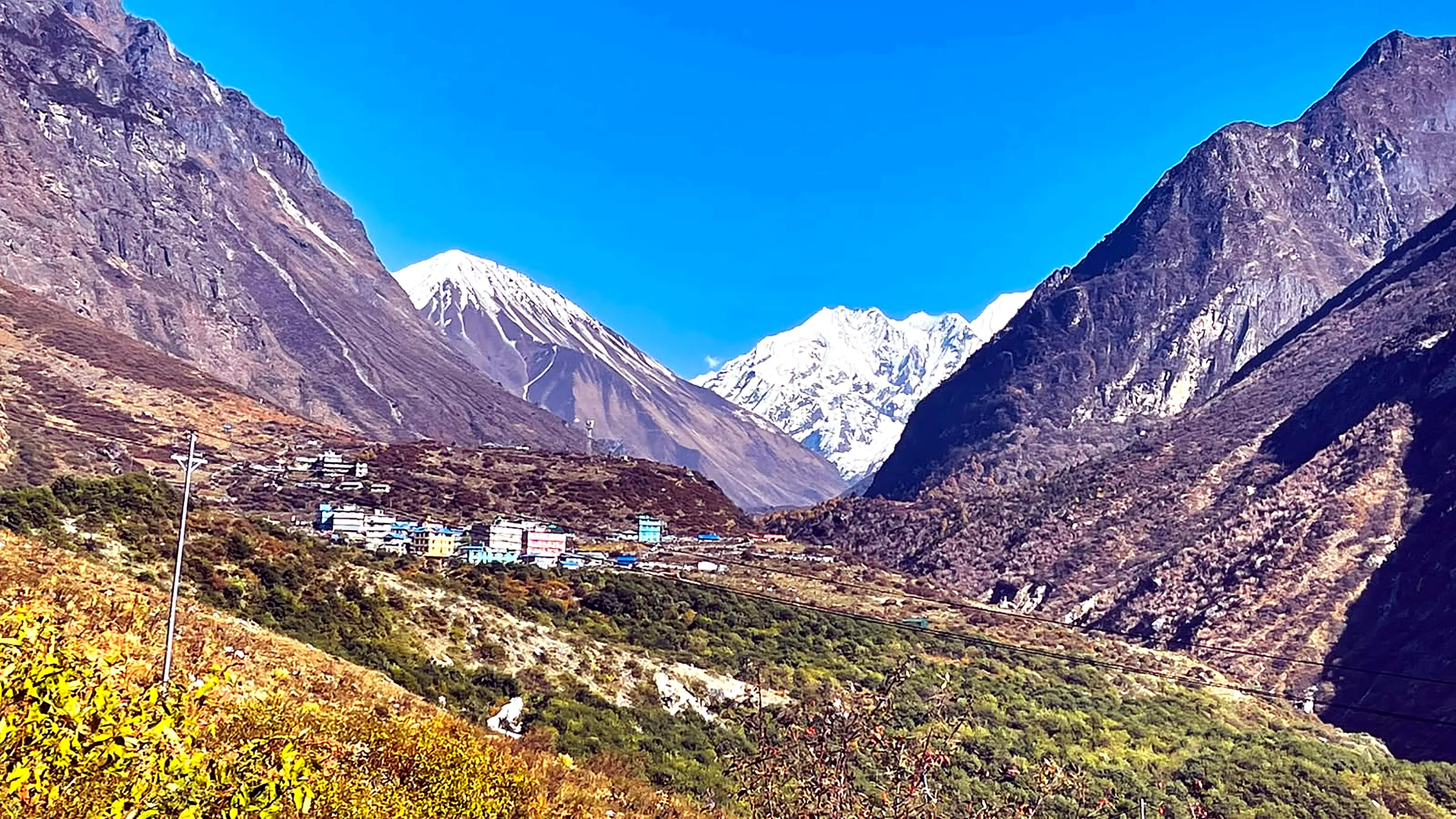
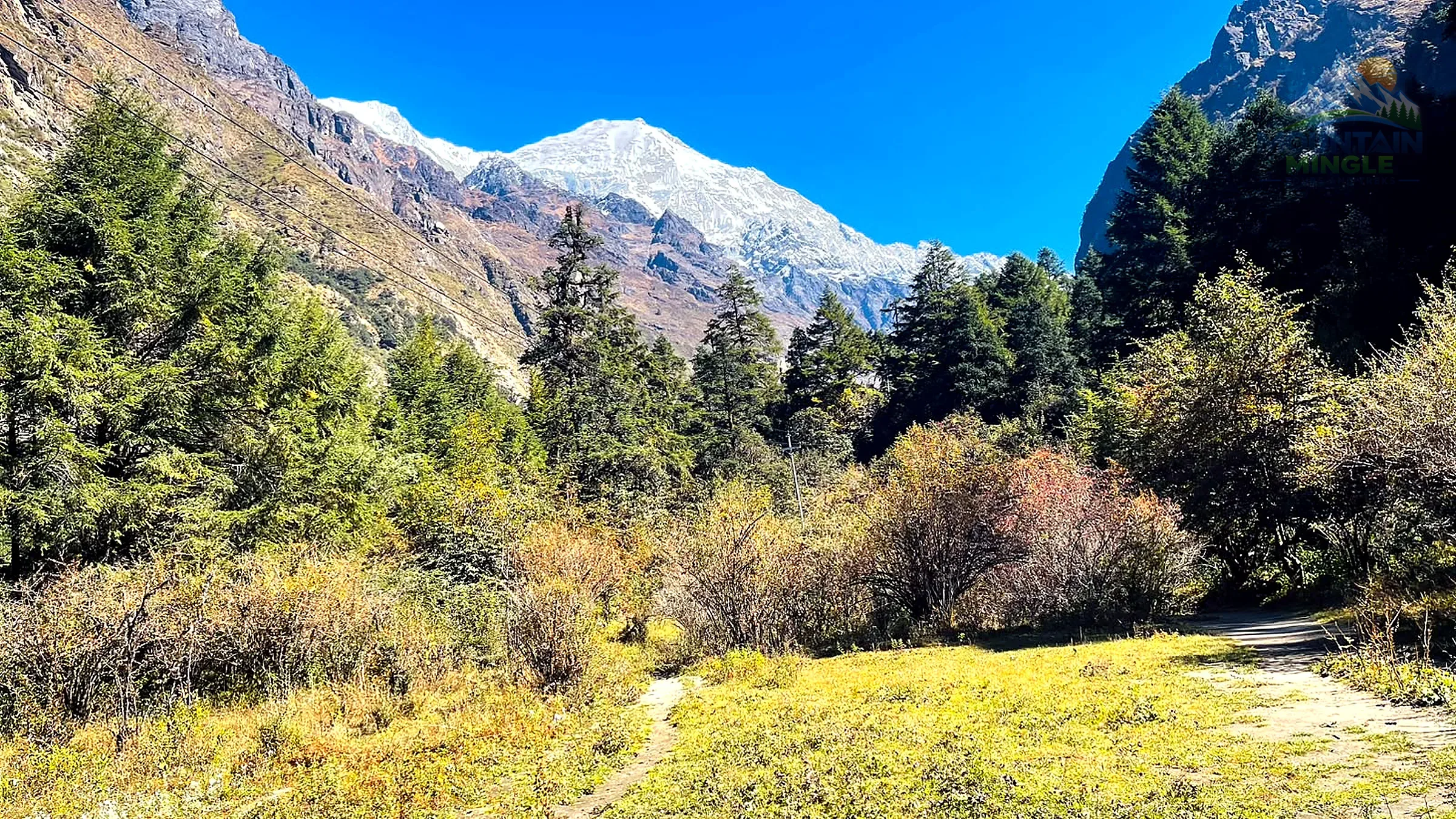
The Langtang Valley trek is an 8-day walk through a glacial valley north of Kathmandu. It begins with a day's drive to Syabrubesi, follows the Langtang Khola river up through forest and yak pastures, and reaches Kyanjin Gompa at 3,870 m. From there, a half-day climb to Kyanjin Ri (4,773 m) gives a close view of Langtang Lirung and the peaks around it. The route is moderate, needs no climbing skills, and is one of the nearest high-mountain treks to the capital.
Mountain Mingle Tours and Treks runs this trek from our office in Thamel, Kathmandu, with local guides who grew up around these trails. We cover the permits, the transport, the teahouse bookings and the guide and porter, so you only have to walk.
Langtang Valley trek at a glance
| Duration | 8 days, 7 nights (Kathmandu to Kathmandu) |
| Starting point | Kathmandu, then drive to Syabrubesi |
| Highest point reached | Kyanjin Ri, 4,773 m |
| Highest overnight stay | Kyanjin Gompa, 3,870 m |
| Walking time | 4 to 7 hours a day |
| Distance on foot | Roughly 75 km in total |
| Difficulty | Moderate |
| Accommodation | Teahouses on the trail |
| Best seasons | March to May, October to November |
| Region | Langtang National Park, Rasuwa District, Bagmati Province |
| Group size | One person to a larger group; private departures available |
| Price |
About the Langtang Valley Trek
Langtang sits less than 70 km north of Kathmandu in a straight line, against the border with Tibet. The road to the trailhead takes most of a day because it climbs through steep hill country, but once you start walking, the capital feels far away. Within two days the forest closes in around you. By the third, the valley opens into a wide glacial basin, and the snow peaks are close enough that the weather on them is visible.
The valley is often called the Valley of Glaciers. Locals tell a story that the name comes from a lama who followed a lost yak into the valley: "lang" means yak and "tang" means to follow. The name suits the place. Yaks graze the high pastures, and the trail passes stone-walled fields, prayer walls and small Tamang villages where the pace of life is set by the herd.
Why people choose Langtang ?
- It is close. You can leave Kathmandu in the morning and sleep in a mountain village the same night, which suits people with limited time.
- It is quieter than the Everest and Annapurna routes. Teahouses here are still family-run and usually have space in the shoulder months, and the trail is rarely crowded.
- It has a clear high point. Kyanjin Ri is a day hike from Kyanjin Gompa that most reasonably fit walkers can finish, and the view from the top makes the long approach worthwhile.
- It is a place with a history. The 2015 earthquake triggered a large avalanche that destroyed the old Langtang village. The village was rebuilt, and many of the families who run teahouses today lived through it. Staying in these lodges puts money straight into the local economy.
Who this trek suits ?
You do not need to have trekked at altitude before. You do need to be comfortable walking for five to six hours a day on uneven ground with a light daypack, and to be able to climb for several hours on a steep trail on the Kyanjin Ri day. Many first-time trekkers and older walkers do this route at an easy pace. If you are unsure, send us a message and we will talk through your walking experience with you.
The valley and its people
Langtang National Park
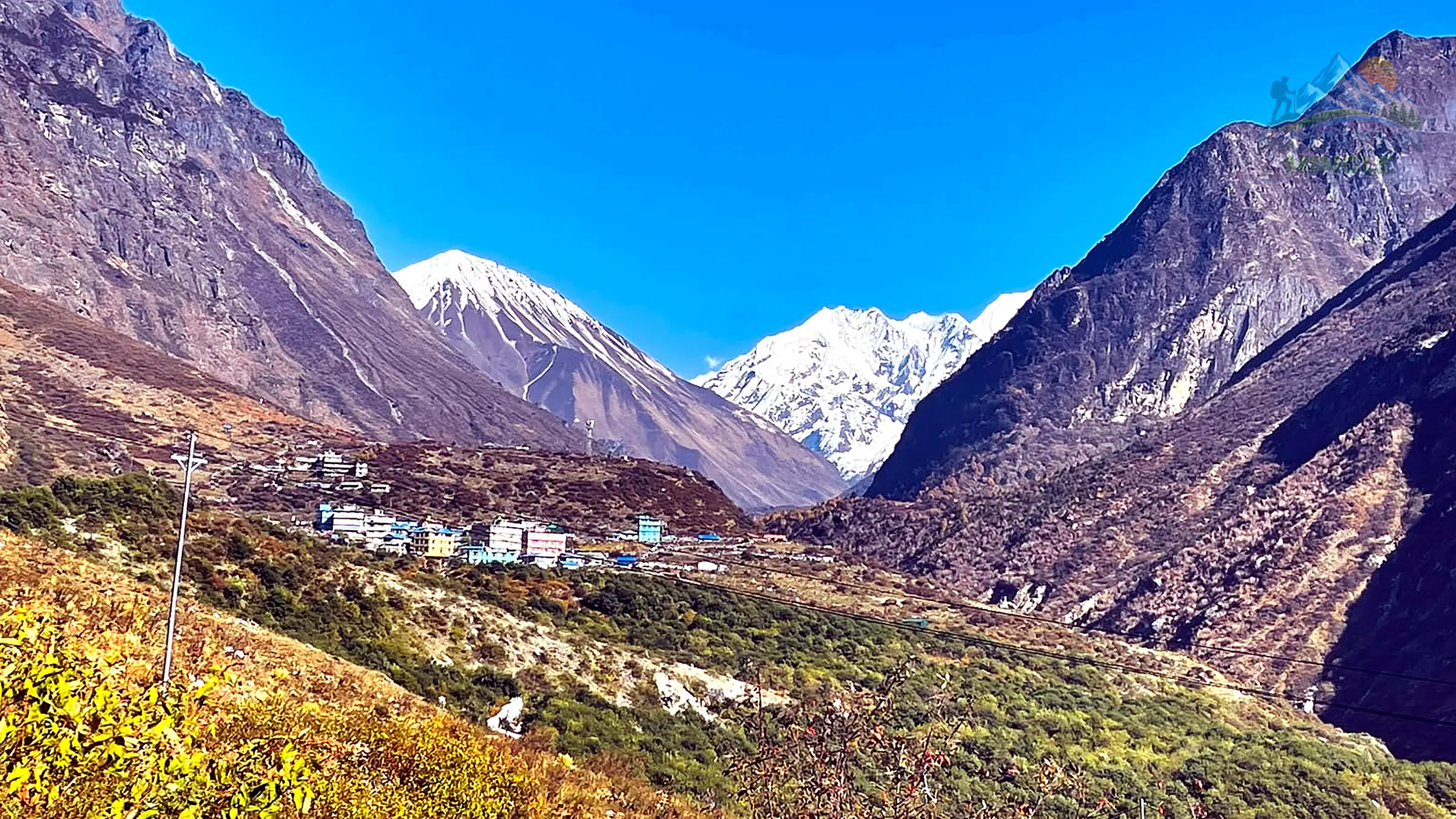
The trek lies inside Langtang National Park, created in 1976 as Nepal's first Himalayan national park. It covers about 1,710 square kilometres and rises from subtropical river valleys to peaks above 7,000 m. The lower trail runs through oak, hemlock, maple and rhododendron forest. Rhododendron is Nepal's national flower, and in April the hillsides above Lama Hotel turn red and pink. Above 3,000 m the forest gives way to juniper, scrub and open pasture.
Wildlife
Langur monkeys are common in the lower forest and easy to hear before they are seen. Himalayan tahr and musk deer live higher up and are shy. Red pandas and Himalayan black bears also live in the park, but sightings are rare and most trekkers do not see them. Birdwatchers will find Himalayan monal, snow pigeons and several species of laughingthrush along the way.
Tamang culture and Kyanjin Gompa
The people of Langtang are mostly Tamang, with Tibetan Buddhist traditions and a language closely related to Tibetan. You will pass mani walls, which are long stone walls carved with prayers, and chortens and prayer wheels at the entrances to villages. The custom is to walk to the left of them, keeping them on your right side. Your guide will explain the details as you go.
Kyanjin Gompa is a small monastery above the main settlement. A small cheese factory in the village makes yak cheese, a craft that began in the 1950s with outside help and is now run locally. Cheese, yak butter tea and fresh bread are on most Kyanjin menus.
Langtang Valley Trek Itinerary
Times below are for a steady walking pace, including short breaks and not including lunch. Altitudes are approximate and may differ by a few metres from other sources.
| Day | Route | Walking time | Sleeping altitude |
|---|---|---|---|
| 1 | Kathmandu to Syabrubesi (drive) | 7 to 8 hours by road | 1,500 m |
| 2 | Syabrubesi to Lama Hotel | 6 to 7 hours | 2,470 m |
| 3 | Lama Hotel to Langtang Village | 6 hours | 3,430 m |
| 4 | Langtang Village to Kyanjin Gompa | 4 to 5 hours | 3,870 m |
| 5 | Kyanjin Ri and Kyanjin Gompa | 5 to 6 hours | 3,870 m |
| 6 | Kyanjin Gompa to Lama Hotel | 6 to 7 hours | 2,470 m |
| 7 | Lama Hotel to Syabrubesi | 5 to 6 hours | 1,500 m |
| 8 | Syabrubesi to Kathmandu (drive) | 7 to 8 hours by road | 1,400 m |
Tour Itinerary & Day-by-Day Schedule
Drive from Kathmandu to Syabrubesi
Syabrubesi is a busy trailhead town at the meeting point of the Bhote Koshi and Langtang rivers. The Tibet border crossing at Rasuwagadhi is about 20 km further north. After checking in, you can walk through the bazaar or just rest. Your guide will do a gear check and go over the plan for the next day.
Syabrubesi to Lama Hotel
Rimche is a good place for lunch. From there it is a short walk uphill to Lama Hotel, a cluster of teahouses in the forest. Langur monkeys are often seen between Bamboo and Rimche. You gain about 970 m today, which is the biggest climb of the first half of the trek, so go slowly.
Lama Hotel to Langtang Village
You pass Thangshyap and then reach Langtang Village. The original village lay higher up and was buried in the 2015 avalanche. The rebuilt village stands a short way below it, and a memorial marks the old site. Your guide can take you there in the late afternoon if you want to see it. Teahouses here serve local food, including potato dishes and Tibetan-style bread.
Langtang Village to Kyanjin Gompa
You arrive at Kyanjin Gompa at about 3,870 m, usually before lunch. The afternoon is free for a short walk to the monastery, a visit to the cheese factory, or a nap. Many people find they sleep badly on the first night at this height. That is normal and usually passes after a day.
Kyanjin Gompa to Kyanjin Ri or Tserko Ri
- Option 1: Kyanjin Ri (4,773 m)
We start early, around 5:30–6:00 AM, when the skies are often clear and the mountain views are at their best. The trail climbs steeply from Kyanjin Gompa through grassy slopes and rocky terrain. The ascent generally takes around 3–4 hours, including short breaks. The final section is particularly challenging, but reaching the summit makes every step worthwhile.
At the top, colourful prayer flags welcome you to an incredible Himalayan panorama. Enjoy magnificent views of Langtang Lirung, Langtang Ri, Dorje Lakpa, Naya Kanga, and Yala Peak, along with the impressive Kyanjin Glacier spread out below.
After spending some time enjoying the scenery and taking photographs, we descend to Kyanjin Gompa, which usually takes around 2 hours.
- Option 2: Tserko Ri (Approximately 4,984 m)
For those looking for a more challenging adventure, Tserko Ri is an excellent choice. At approximately 4,984 metres, it is the highest viewpoint of the standard Langtang Valley Trek. We begin very early, often before sunrise, carrying a headlamp or torch for the initial part of the climb.
The trail gradually becomes steeper as we leave Kyanjin Gompa behind and ascend through rugged alpine terrain. The climb is demanding, usually requiring around 4–5 hours or more, depending on your pace, weather, and trail conditions.
Reaching the summit is a truly rewarding experience. You will be treated to spectacular panoramic views of Langtang Lirung, Langtang Ri, Yala Peak, surrounding Himalayan ranges, and the vast glacial landscape. On a clear morning, watching the first sunlight illuminate the snow-covered peaks is an unforgettable experience.
After enjoying the summit, we descend carefully to Kyanjin Gompa, which generally takes around 2–3 hours.
Afternoon at Kyanjin Gompa
Whichever viewpoint you choose, the afternoon is reserved for rest and exploration. You can visit the traditional cheese factory, explore the local monastery, take a gentle walk towards the glacier moraine, or simply relax at your teahouse while enjoying the incredible mountain surroundings.
After a rewarding day in the high Himalayas, we spend another night at Kyanjin Gompa.
Kyanjin Gompa to Lama Hotel
Lama Hotel to Syabrubesi
Drive from Syabrubesi to Kathmandu
Optional Extensions
Tserko Ri (4,984 m). Add a day at Kyanjin Gompa and climb Tserko Ri, a longer and higher hike that takes 6 to 7 hours. It is a good choice if you feel strong on Day 5 and want a wider view.
Langshisha Kharka. A quiet side valley east of Kyanjin with summer yak camps. A full day out and back.
Gosaikunda and Helambu. From Lama Hotel you can cross toward Thulo Syabru and continue to the holy lakes at Gosaikunda, then walk out through Helambu. This adds roughly four to five days and is best done in October or May.
We will plan any of these for you. Tell us how many days you have, and we will build the itinerary around them.
Best Time For The Langtang Valley Trek
The trek is possible in every season, but the experience differs a lot.
Spring (March to May)
Days are warm in the valley and cool at Kyanjin. Rhododendrons flower from late March to April, and the forest is at its most colourful. Afternoons can be hazy. Nights at Kyanjin are cold, and temperatures can fall below freezing.
Autumn (October to November)
This is the clearest season. After the monsoon the air is washed clean, and views are sharp from early morning. October is busier than November. Early November is a good compromise: still dry, with fewer people.
Winter (December to February)
Cold and very clear. Nights at Kyanjin drop well below freezing, and some higher teahouses close. Snow can cover the trail above Langtang. This is only for people who are well equipped and who like a quiet trail. Tell us in advance and we will check which lodges are open.
Monsoon (June to August)
The valley is green and the flowers are at their best, but rain and cloud hide the mountains for much of the day. Leeches live in the lower forest, and landslides can block the road to Syabrubesi. We run this trek in the monsoon only on request.
Difficulty, Fitness and Altitude
Daily walking
On most days you walk between four and seven hours, with an uphill or downhill climb of 500 to 1,000 m. The trail is a mix of stone steps, dirt paths, rocky stretches and suspension bridges. There are no technical sections, but a few places near landslide zones need care. You carry a daypack with water, a rain jacket and a warm layer. Our porters carry the rest of your gear, with one porter for every two trekkers.
Altitude
Altitude is the main challenge here, more than the distance. The route climbs from about 1,500 m to 3,870 m in four days, and the sleeping heights are chosen so that the rise between nights stays manageable, though the Day 3 gain is larger than ideal. The most common sign of trouble is a headache that does not go away with water and rest, sometimes with nausea or poor sleep.
A few habits reduce the risk:
- Walk slowly and breathe steadily. If you cannot speak a sentence, slow down.
- Drink three to four litres of water a day.
- Avoid alcohol until you are back below 3,000 m.
- Tell your guide about any symptom as soon as it starts, however mild.
Your guide carries a pulse oximeter and a first-aid kit and checks everyone's readings each evening. If symptoms get worse, the rule is simple: do not go higher, and descend if needed. If evacuation is needed, we arrange a helicopter through your insurer.
Preparation
Start training six to eight weeks before the trek. Hill walking with a loaded pack, stair climbing and cycling all help. Break in your boots before you arrive. Anyone with a heart or lung condition, or who is pregnant, should see a doctor before booking.
Accommodation, Food and Water
Teahouses
You sleep in family-run teahouses, in simple rooms with two single beds and a shared bathroom. Lodges provide blankets and sometimes quilts, but at Kyanjin it is worth bringing a good sleeping bag rated to at least minus 10 degrees Celsius. Dining rooms are the warmest place in a lodge. Many have a stove that burns yak dung or wood in the evening.
Meals
Breakfast is usually eggs, porridge or Tibetan bread with tea. Lunch and dinner are most often dal bhat, the Nepali meal of rice, lentil soup and vegetable curry, with free refills in most lodges. Noodle soup, momos, fried rice, pasta and pizza are also on most menus. Vegetarian food is easy to find. Guides usually advise against meat higher up the valley, because it is carried in on foot and may not be fresh.
Water, power and signal
Lodges sell boiled or filtered water. Using purification tablets or a filter bottle is cheaper and reduces plastic waste. Charging is available for a fee, and the electricity is mostly solar, so keep devices on low power. Hot showers cost extra and may not be available at Kyanjin in winter. Mobile signal is patchy, and Wi-Fi, where it exists, is slow and paid. There are no ATMs on the trail, so bring enough Nepali rupees from Kathmandu for personal spending.
Permits and rules
Trekkers in Langtang need a Langtang National Park entry permit and a local trekking permit. We apply for both before you start, using a copy of your passport and a passport photo. You will also need a valid Nepali visa, which you can buy on arrival at Tribhuvan International Airport or apply for online beforehand.
Independent trekkers are allowed in the valley in most seasons, but we advise against going without a guide. The trail is easy to follow in clear weather, but a guide manages the altitude, books rooms in busy periods, and is there if the weather changes or someone becomes ill.
Cost of the Langtang Valley trek
The price is from [add price] per person. For parties of two or more, the cost per person drops. We quote one price, and there are no extra charges added later.
What is included
- Airport pick-up and drop-off in Kathmandu
- Private vehicle from Kathmandu to Syabrubesi and back
- Langtang National Park permit and local trekking permit
- Licensed trekking guide, and one porter for every two trekkers
- Guide and porter wages, insurance, food, lodging and equipment
- Teahouse accommodation on the trail for seven nights, twin-sharing
- Three meals a day with tea or coffee during the trek
- First-aid kit and pulse oximeter carried by your guide
- All government taxes and our service charge
What is not included
- International flights and Nepal visa fee
- Hotel and meals in Kathmandu before and after the trek
- Travel and medical insurance, which must cover trekking up to 5,000 m and helicopter evacuation
- Bottled drinks, hot showers, battery charging and Wi-Fi on the trail
- Personal gear, which you can rent in Thamel if you do not own it
- Tips for the guide and porter. Tipping is customary and the amount is your choice; we are happy to suggest a range when you book.
What to pack
Pack light. A duffel bag of about 10 kg per person works well.
- Footwear: Broken-in waterproof hiking boots, camp shoes or sandals, and four pairs of wool or synthetic socks
- Clothing: Two base layers, one fleece or light down jacket, one insulated jacket for Kyanjin, a waterproof shell, trekking trousers and a pair of thermal leggings
- Head and hands: Warm hat, sun hat, light gloves and a pair of warmer ones, a buff and sunglasses with side protection
- Sleeping: A sleeping bag rated to minus 10 degrees Celsius or lower
- Health: Sunscreen SPF 50, lip balm with sun protection, blister plasters, water purification tablets and any personal medicine. Ask your doctor about altitude medicine.
- Other: Walking poles, a headlamp with spare batteries, a 1-litre water bottle, a power bank and a small towel
IMAGE: Flat lay of packed gear: boots, jacket, hat, poles, headlamp and water bottle. File: langtang-trek-packing-list.webp Alt text: Packing list gear for the Langtang Valley trek laid out on a table
Safety and guides
Safety comes first on every trek we run. Our guides are licensed, first-aid trained and local to the Langtang area or nearby Rasuwa District. They know when to push on, when to wait and when to turn around. Their pay does not depend on reaching the top, so turning back is always an acceptable decision.
We are reachable around the clock. If plans change because of weather, a landslide or illness, you can call or message us at any time, and we will rearrange the route, transport and accommodation. The team in Kathmandu keeps in touch with your guide each evening during the trek.
Plan your Langtang Valley trek with Mountain Mingle
Tell us your dates, group size and any preferences, and we will send a clear plan and price within one working day. You can book online, send us a message on WhatsApp, or visit our office in Thamel, Kathmandu.
You may also like: Annapurna Base Camp trek, Mardi trek, Everest Base Camp.