
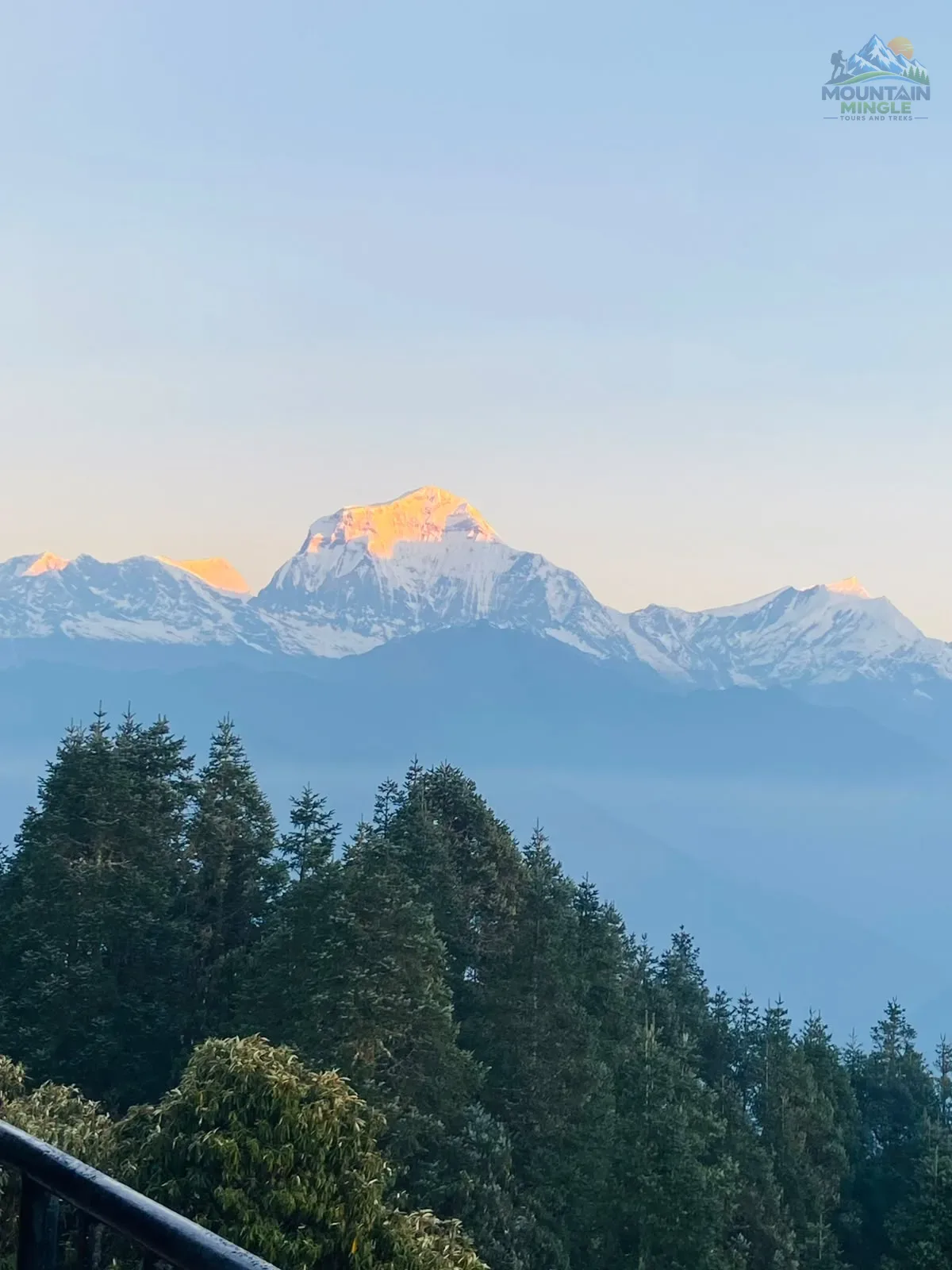
The Poon Hill trek, also called the Ghorepani Poon Hill trek, is a short walk in the Annapurna Conservation Area, Gandaki Province, Nepal, that ends its climb at a sunrise viewpoint at 3,210 m. From Poon Hill you can see Dhaulagiri (8,167 m), Annapurna I (8,091 m), Annapurna South and Machhapuchhre from one spot. Mountain Mingle Tours and Treks runs the trek as an 8-day trip from Kathmandu, with 4 days of walking, lodge stays in Tikhedhunga, Ghorepani, Tadapani and Ghandruk, and a licensed guide.
Most of the walk runs through oak and rhododendron forest and past Gurung villages. The highest sleeping stop is Ghorepani at 2,860 m. The hard parts are the long stone staircase on day 4 and the pre-dawn climb on day 5.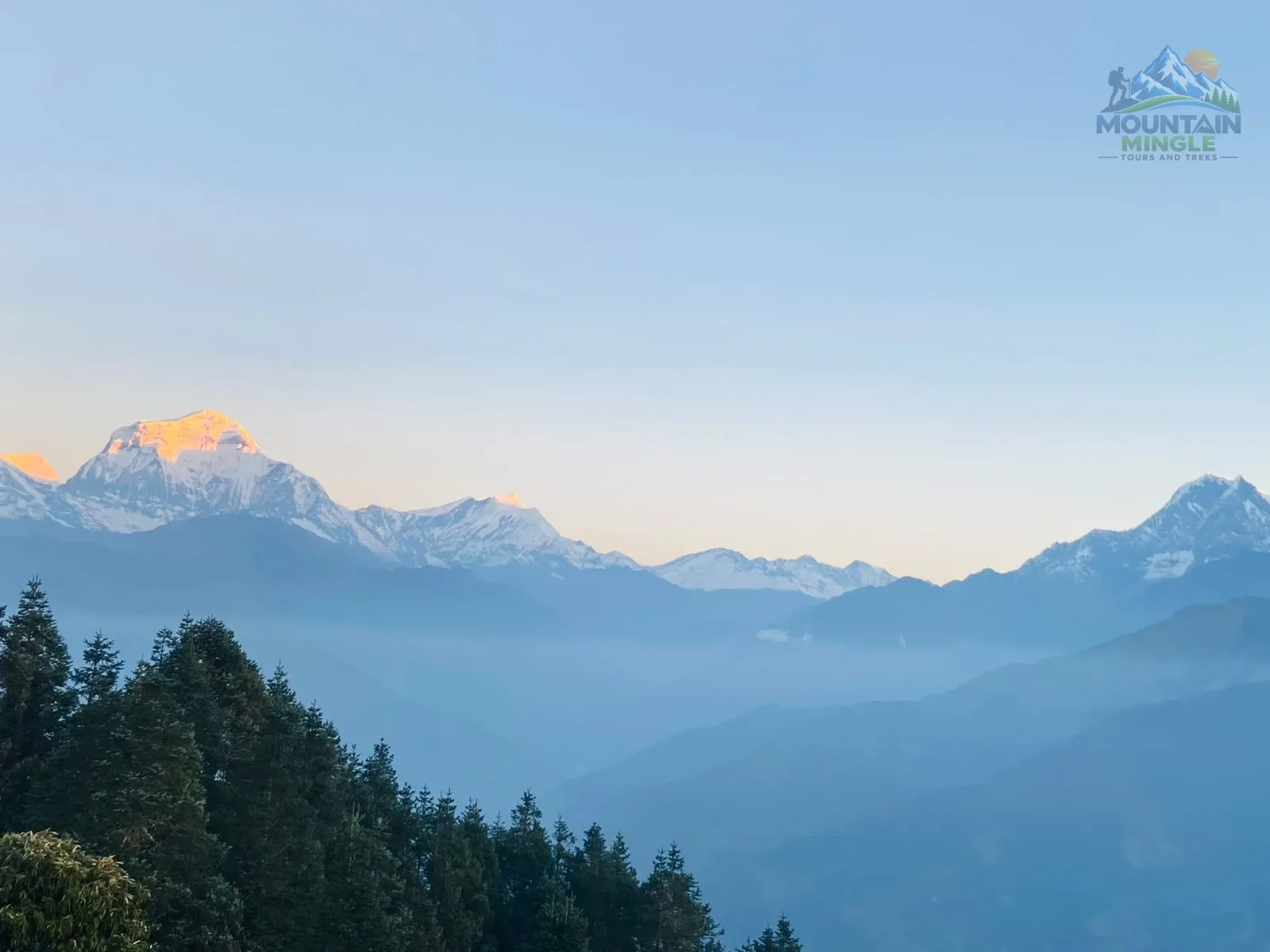
| Trek fact | Detail |
|---|---|
| Trek name | Poon Hill trek (Ghorepani Poon Hill trek) |
| Region | Annapurna Conservation Area, Kaski and Myagdi districts, Gandaki Province, Nepal |
| Highest point | Poon Hill, 3,210 m |
| Highest sleeping stop | Ghorepani, 2,860 m |
| Duration | 8 days, including 4 days of walking |
| Start and end | Kathmandu |
| Trailhead | Nayapul, about 1.5 hours by road from Pokhara |
| Difficulty | Moderate, with one hard day on stone steps |
| Typical walking day | 3 to 7 hours |
| Best seasons | March to May, and September to November |
| Accommodation | Hotels in Kathmandu and Pokhara, lodges (teahouses) on the trail |
| Permit | Annapurna Conservation Area Permit (ACAP), arranged by us |
| Guide | Licensed guide, required for foreign trekkers |
| Price | On request |
This trek suits first-time Himalayan trekkers who can walk 5 to 7 hours a day and are happy to climb stairs. If you want a longer walk in the same area, see our Khopra Ridge trek or the Annapurna Base Camp trek.
Dates, group size and price depend on your plans. Book this trip or ask us to customise the route.
What you will see on the Poon Hill trek
Poon Hill at sunrise
Poon Hill is a hill on the border of Kaski and Myagdi districts, about 45 to 60 minutes above Ghorepani on a stone path. The summit looks over Dhaulagiri and Dhaulagiri II, the Annapurna massif, Hiunchuli and Machhapuchhre. The Kathmandu Post notes that sunrise lights up Annapurna South. A viewing tower stands on the summit.
The Kathmandu Post reported in 2019 that the hill was once known as Lumthung ko Danda, and that it was renamed after Tek Bahadur Poon, a former Indian Army major, because the area is mainly a Pun settlement. The tower was built in his memory.
The view depends on the weather. Mornings are clearest in spring and autumn, and cloud can hide the peaks at any time.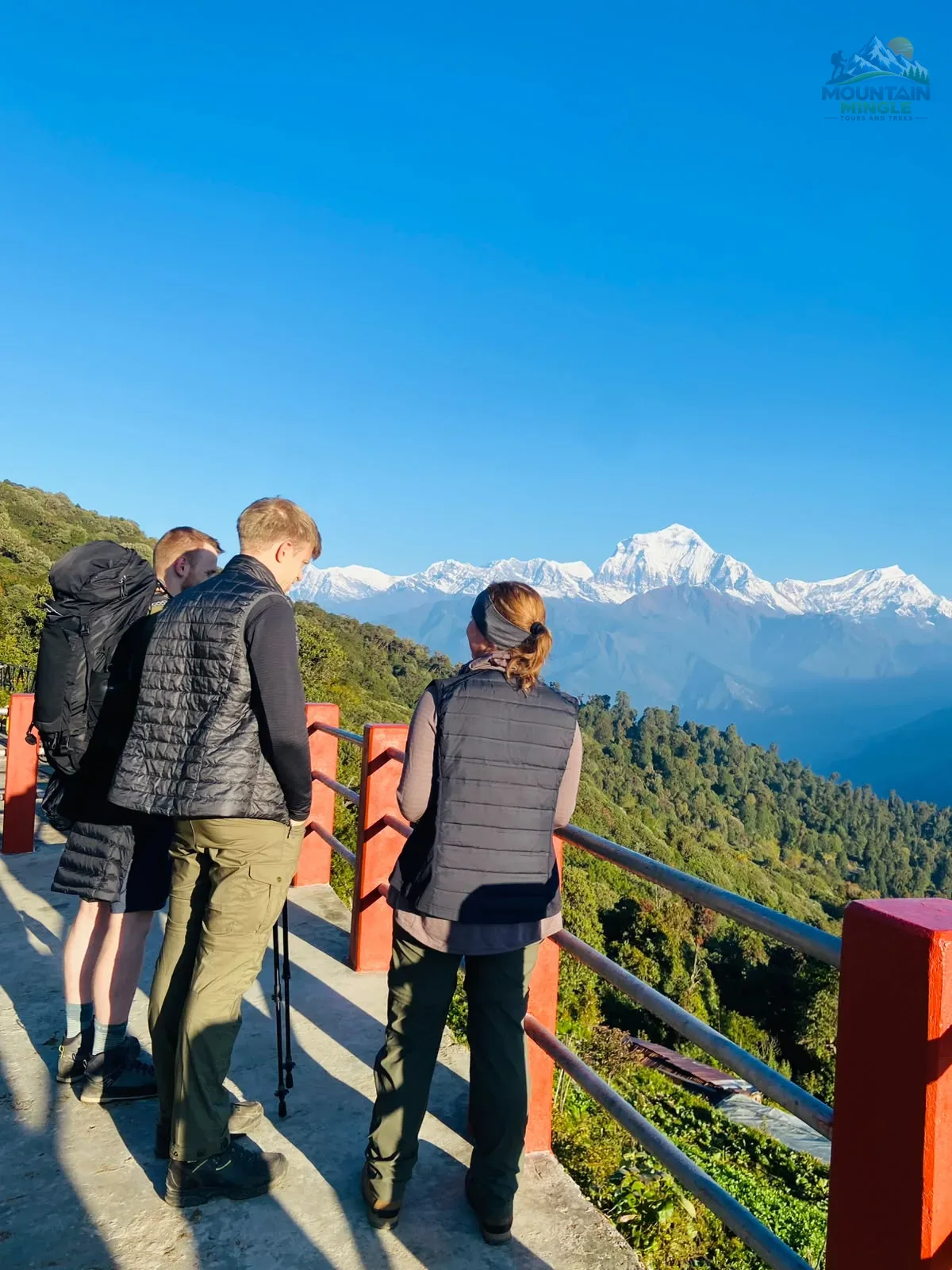
The rhododendron forest at Ghorepani
The National Trust for Nature Conservation (NTNC), which manages the conservation area, describes the Ghorepani section in its management plan as containing the world's largest rhododendron forest. The plan records nine rhododendron species in the conservation area. The trees flower in spring, mostly in March and April, and the forest around Ghorepani is where to look for them. In winter the same forest is often under snow.
Ghorepani, at 2,860 m, has lodges for trekkers from several routes. It is the base for Poon Hill and the place to rest after the climb from Ulleri
Gurung villages and Ghandruk
Gurung, Magar and Ghale communities live on the southern side of the conservation area, according to NTNC's management plan, and the plan lists Ghandruk among the typical Gurung hamlets. NTNC started a pilot conservation project at Ghandruk in 1986. Today Ghandruk is a large village on a hillside, with family-run lodges and museums showing Gurung heritage objects. On a clear evening Annapurna South and Machhapuchhre show above the rooftops.
Tadapani, the stop before Ghandruk, is a small village on a ridge and a junction for several Annapurna trails.
Poon Hill trek itinerary, day by day
Walking and driving times are rough estimates for the day, without long stops. Altitudes are rounded and can differ from the figures on lodge signs and maps. Weather, trail and road conditions and the group's pace can change the plan, and the guide makes the final call each day.
| Day | Route | Time | Sleeping altitude |
|---|---|---|---|
| 1 | Arrive in Kathmandu | None | 1,400 m |
| 2 | Kathmandu to Pokhara | 6 to 7 hours by road | 820 m |
| 3 | Pokhara to Nayapul, walk to Tikhedhunga | 1.5 hours by road, then 3 to 5 hours | 1,540 m |
| 4 | Tikhedhunga to Ghorepani via Ulleri | 6 to 7 hours | 2,860 m |
| 5 | Poon Hill, then Ghorepani to Tadapani | 1 hour, then 5 to 7 hours | 2,630 m |
| 6 | Tadapani to Ghandruk | 3 to 5 hours | 1,940 m |
| 7 | Ghandruk to Pokhara | About 3 hours by road | 820 m |
| 8 | Pokhara to Kathmandu | 6 to 7 hours by road | 1,400 m |
Tour Itinerary & Day-by-Day Schedule
Arrival in Kathmandu (1,400 m)
Overnight: Hotel in Kathmandu
Kathmandu to Pokhara (820 m)
Overnight: hotel in Pokhara.
Pokhara to Nayapul, walk to Tikhedhunga (1,540 m)
Overnight: lodge in Tikhedhunga.
Tikhedhunga to Ghorepani (2,860 m)
Overnight: lodge in Ghorepani.
Poon Hill, then Ghorepani to Tadapani (2,630 m)
Overnight: lodge in Tadapani.
Tadapani to Ghandruk (1,940 m)
Overnight: lodge in Ghandruk.
Ghandruk to Pokhara (820 m)
Overnight: hotel in Pokhara.
Pokhara to Kathmandu (1,400 m)
Overnight: hotel in Kathmandu, or the end of the trip if you fly out.
How difficult is the Poon Hill trek?
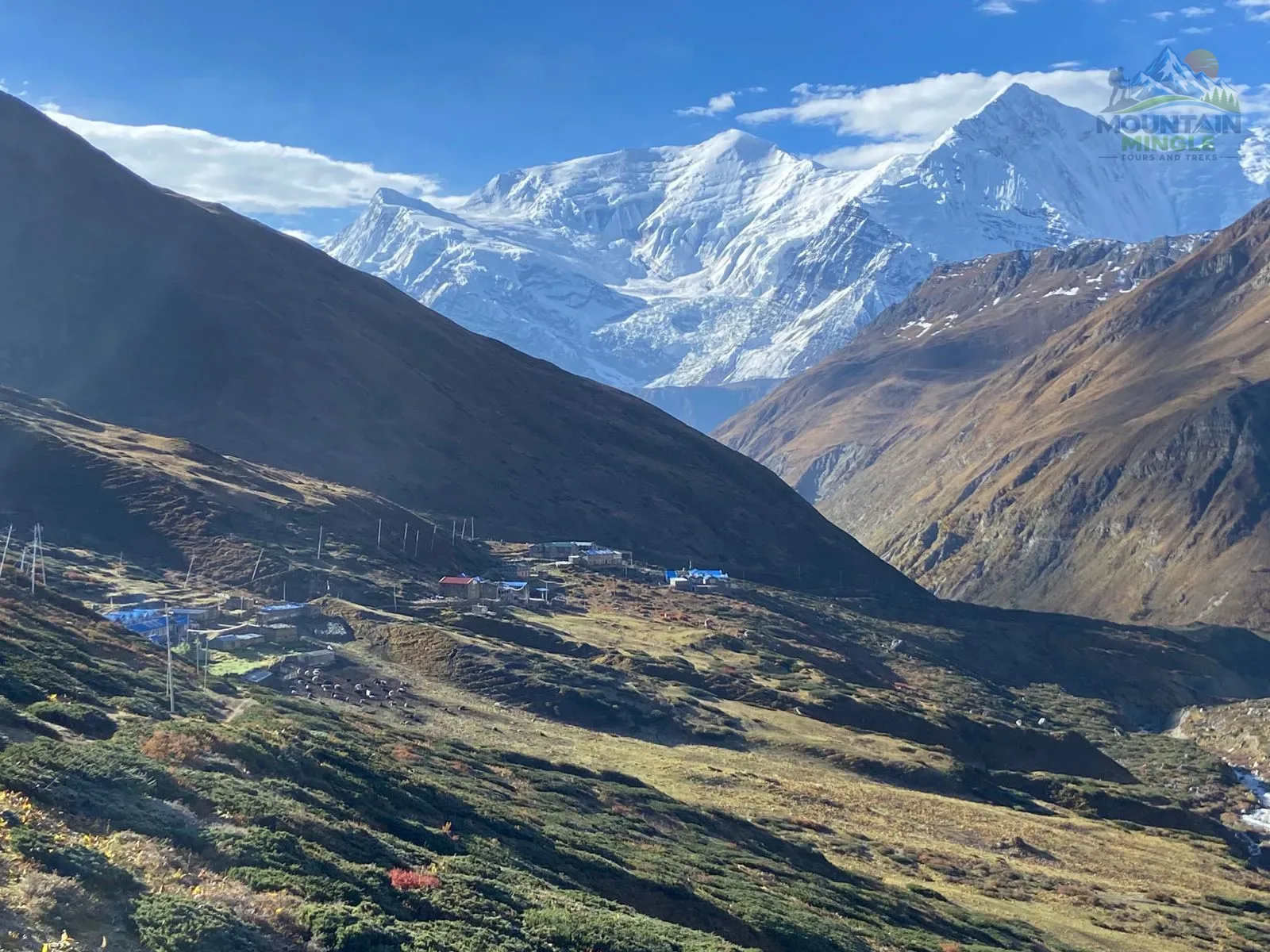
The trek is moderate. It needs steady fitness and no climbing skill, and there are no ropes, crampons or technical sections. Paths are stone steps, forest trails and village lanes. Stone steps and grass are slippery in rain, and mule trains use the main path, so give them room.
You should be able to walk 5 to 7 hours a day for several days in a row with a daypack of 5 to 8 kg. Regular hill walking and stair climbing in the two months before you travel will help, and stairs matter more than distance here. If you have a heart, lung or blood pressure condition, speak to your doctor before booking.
Altitude on the Poon Hill trek
The highest sleeping stop is Ghorepani at 2,860 m, and Poon Hill (3,210 m) is the highest point, reached on a morning climb of about 350 m from the lodge. Medical guidance from the US Centers for Disease Control and Prevention (CDC) and the UK's TravelHealthPro service on slow ascent applies once you sleep above about 3,000 m, and this trek stays below that height. Some people still feel the altitude at these heights, so know the early signs: headache, nausea, dizziness, loss of appetite and poor sleep.
Tell your guide at once if you notice any of them. Do not climb higher with symptoms, go down if they get worse, and never leave a sick person alone. Drink water often and avoid alcohol and sleeping pills at height. The Poon Hill climb on day 5 starts in the cold and the dark, so wear your warm layers from the start.
If someone cannot walk, the guide calls our team, and we arrange evacuation and contact your insurer. Your policy therefore needs to cover trekking to at least 3,500 m and helicopter rescue.
When is the best time to trek to Poon Hill?
The best months are March to May and September to November. Both seasons have stable weather, and the sunrise view is most often clear.
Spring (March to May) brings rhododendron flowers in the forest and warmer days, with clear mornings and cloud building later. Autumn (September to November) follows the monsoon, and the air is clean, with the clearest mountain views of the year. Autumn is also the busiest season for lodges.
Winter (December to February) is cold, and snow can cover the upper trail. The monsoon (June to August) brings rain, leeches on the lower trail and cloud that hides the peaks at dawn. We do not recommend either season for a first visit.
Which permits does the Poon Hill trek need?
Every foreign trekker needs an Annapurna Conservation Area Permit (ACAP). NTNC issues it, and we buy it for you before the trek, so you only need to send your passport details and a photo. The fees on the NTNC e-permit page are:
- NPR 3,000 for foreign nationals, tax included
- NPR 1,000 for citizens of SAARC countries
- No permit for children under 10
A permit is non-refundable and non-transferable, including if you cancel your trip. A permit bought directly at a checkpoint costs double, which is why we arrange it in advance. Paying online by Visa or MasterCard adds a 2.9% gateway charge. Checkpoints check permits and passports, so keep your original passport with you on the trail.
NTNC's management plan says the budget of the conservation area is covered mainly by entrance fees, so your permit fee goes toward running the area.
Nepal's tourism authorities decided in 2023 that foreign trekkers must hire a licensed guide through a registered agency, and walking the trail on your own is not allowed. Your guide travels with you for the whole trek. The rules for the TIMS trekker card have also changed in recent years. If the card is needed on your dates, we arrange it through our registered agency and tell you before you leave home.
Lodges, food and water on the trail
Rooms in Tikhedhunga, Ghorepani, Tadapani and Ghandruk are in family-run lodges, usually with two single beds, a mattress and blankets. Bathrooms are often shared and rooms are not heated, so the dining hall, with its stove, is the warmest place after dark. Hot showers, device charging and Wi-Fi usually cost extra and may be limited in some villages.
Dal bhat (rice with lentil soup and vegetable curry) is the usual trekker meal, with noodles, fried rice, pasta, eggs, porridge and tea as common alternatives. Prices rise with altitude because supplies are carried up on foot or by mule.
Do not drink untreated water. Buy boiled water at the lodges, or treat your own with tablets, drops or a filter. A refillable bottle cuts down on plastic, and everything you carry in should come out with you.
What to pack
Clothing
- Thermal base layers, top and bottom
- Fleece or light insulated jacket
- Down jacket for the Poon Hill sunrise
- Waterproof jacket and trousers
- Two pairs of quick-drying trekking trousers
- Wool socks and spare underwear
- Warm hat, sun hat and gloves
- Broken-in trekking boots with good ankle support, and sandals for the lodge
Gear
- Duffel bag of 40 to 50 litres, and a daypack of 25 to 30 litres
- Sleeping bag, or the warm blankets the lodges give you plus a liner
- Trekking poles, which help most on the stairs of day 4 and the descent of day 6
- Headlamp with spare batteries, needed for the Poon Hill climb on day 5
- Sunglasses with UV protection, sunscreen and lip balm
- Refillable water bottle and a way to treat water
- Power bank
Health and documents
- Passport and a printed copy
- Travel insurance that covers trekking to at least 3,500 m and helicopter evacuation
- Personal medicines, a blister kit and oral rehydration salts
- Cash in Nepali rupees for drinks, snacks, charging and Wi-Fi
Warm clothing and poles can be hired or bought in Thamel and Pokhara if you would rather not carry them from home.
What is included and what is not
Included in the trek package
- Airport pick-up and drop-off
- Hotel nights in Kathmandu and Pokhara with breakfast (you choose the hotel category when booking)
- Private vehicle with a licensed driver for the road transfers; see our vehicle fleet
- Licensed trekking guide
- Annapurna Conservation Area Permit, and the TIMS card if it applies
- Lodge accommodation on the trail
- Meals on the trail
- Guide salary, food, accommodation and insurance
- First aid kit carried by the guide
- Government taxes and service charges
Not included
- International flights and the Nepal visa
- Travel insurance
- Lunch and dinner in Kathmandu and Pokhara
- Drinks, snacks, hot showers, charging and Wi-Fi on the trail
- Personal gear and equipment hire
- Tips for the guide and porter
- Extra nights caused by weather, illness or a change of plan
- Evacuation costs, which your insurance should cover
Trek with Mountain Mingle Tours and Treks
Mountain Mingle Tours and Treks is a travel company based in Thamel, Kathmandu. Our guides and drivers are local and know the roads and trails. Safety comes first on every trip, and if conditions change on the mountain, your guide makes the call. Our team answers messages around the clock, including on WhatsApp.
We plan each trip around the traveller, and the 8-day route above is a starting point. The Kathmandu Post describes the Ghorepani to Ghandruk route as a walk of three to five days, so we can shorten the plan or add rest days. We can also join Poon Hill to a longer route in the Annapurna region: the Khopra Ridge trek starts from the same villages, and the Annapurna Base Camp trek passes through Ghorepani too. For a shorter walk, look at the Mardi trek. For other regions, see the Langtang Valley trek, the Manaslu Circuit trek and the Everest Base Camp trek. More answers are on our FAQ page, and you can read about the company on the About us page.
Book the Poon Hill trek
Tell us your dates, the size of your group and any changes you want to the route. We reply with a plan and a price.
Official Sources
Permit fees and rules, conservation-area facts and altitude guidance on this page come from these sources. No official route table exists for the Poon Hill trek, so village altitudes and walking times are rounded from several published itineraries, and your guide's figures on the day take priority.
- NTNC e-permit support and fee list
- NTNC, Annapurna Conservation Area Management Plan
- CDC Yellow Book 2026, High-altitude travel and altitude illness
- TravelHealthPro, Altitude illness
- The Himalayan Times, Nepal Tourism Board rules on licensed guides
- The Kathmandu Post, Poon Hill and Ghandruk trek (2019)